
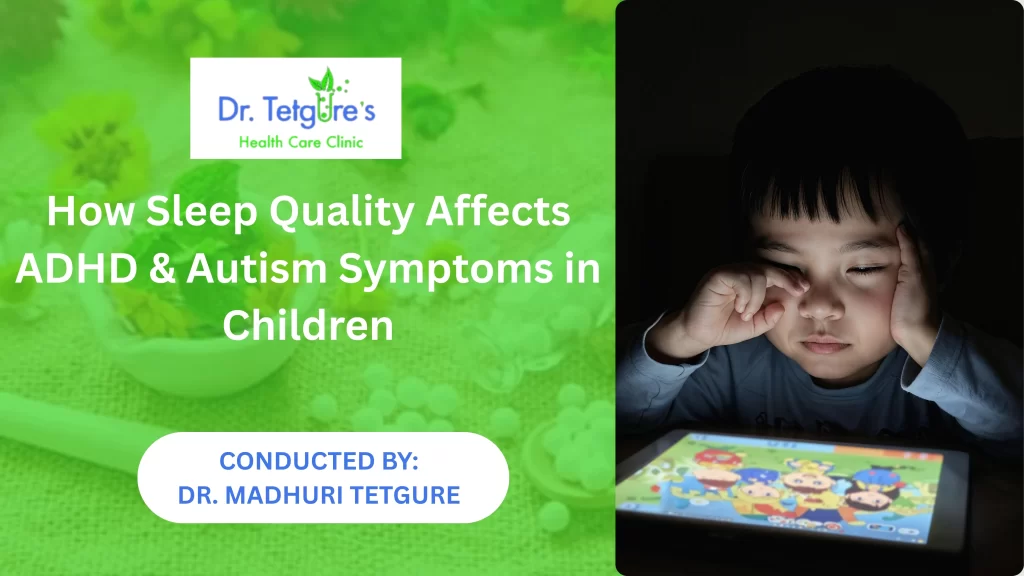
How Sleep Quality Affects ADHD & Autism Symptoms in Children
Sleep functions as a fundamental requirement for child health which most people fail to recognize as important. The sleep patterns of children with Attention Deficit Hyperactivity Disorder (ADHD) and Autism Spectrum Disorder (ASD) directly affect their social behavior and academic performance and emotional control and general health. Parents and caregivers and health professionals need to understand this link because it helps them support developmental growth and daily functional improvements.
The Sleep‑Behaviour Connection
- Sleep supports children’s cognitive development and emotional development and physical development.
- Children with ADHD and autism often face sleep issues:
- They experience trouble falling asleep
- They wake up multiple times during the night
- They experience restless sleep patterns which lead to irregular sleep
- Sleep deprivation results in worse symptoms for:
- People with inattention problems and hyperactivity
- People with anxiety who experience emotional outbursts
- People with sensory sensitivities who experience sensory overload
ADHD & Sleep Challenges
Sleep disturbances in children with ADHD lead to more severe symptoms which include:
- Increased impulsivity
- Trouble concentrating
- Heightened distractibility
- Poor academic performance
- Emotional reactivity
Sleep deprivation causes more severe ADHD-like symptoms because it makes children restless and inattentive and oppositional due to fatigue that impacts brain executive functions.
Why Sleep Quality Matters
People who experience poor sleep will suffer its effects throughout both their nighttime and daytime activities. When the brain lacks the necessary restorative sleep:
Students lose their ability to concentrate which affects their capacity to learn and participate in class.
People find it difficult to manage their emotions which leads to uncontrolled emotional outbursts.
People lose their ability to handle sensory input because they become more sensitive to their surroundings.
Social interactions will experience difficulties because people will lose their ability to stay patient and adjust to new situations.
Sleep difficulties in children with autism increase their anxiety levels and irritability and repetitive behaviors and social challenges create communication and sensory processing and daily routine management difficulties.
Improving Sleep for Better Outcomes
Improving sleep quality results in better overall outcomes. Simple, structured adjustments lead to significant sleep quality improvements:
Establish a calming bedtime routine
Limit screen time before bed
Maintain consistent sleep and wake‑up times
Create a sensory‑comfortable sleep environment
Address potential medical contributors like allergies or sleep apnea
Healthcare professionals work together with families to develop personalized sleep management plans for their children.
The Role of Healthy Sleep Habits in Improving Daily Functioning
- Improves attention, focus and learning capability during the day
- Helps regulate emotion and lowers anxiety and irritability.
- It improves memory abilities and behavior regulation skills and executive functioning capacities.
- The system improves daily life activities and social interactions together with therapy results.
Conclusion
Sleep functions as an essential requirement which supports all basic human needs. The sleep needs of children who have ADHD and autism disorders should be treated as their most important requirement because it brings about genuine enhancements in their behavior and emotional state and educational progress and overall life experience. At Dr Tetgure Healthcare Clinic, families who take steps to address sleep quality often see positive changes that extend far beyond bedtime.
